

Meyer Gaming was a brand entering the market entirely from scratch in March 2025. There was no brand awareness, no historical sales data and no audience the ad platforms could learn from.
On top of that, the gaming category we operate in is subject to strict content policies on the ad platforms. That made not only growth but also getting every ad through initial approval a critical factor.
Our goal was to create demand from zero with a small-scale media budget, grow that demand sustainably, and take the brand to a point of profitable growth.
By the end of 15 months we had not only met every commercial target; we had significantly exceeded all of the revenue, conversion and ad performance goals.
Target | Result |
|---|---|
Monthly impression growth | ~600% increase versus the starting point |
Total paid conversions | 10%+ above target |
Attributed revenue | 30%+ above target |
Google Ads ROAS | 60%+ above target |
Meta Ads ROAS | 60% above target |
The Problem: Starting with Zero Data
For a new brand, the biggest problem is not being visible. It is that nobody is searching for you.
Meyer Gaming had no past customers, no remarketing audiences and no brand search volume. There were no signals for the ad algorithms to learn from. So our first task was not to capture demand, but to create it.
At the same time, because of the advertising policies in the gaming category, every creative had to be prepared in line with platform rules and go live with minimal revision.
In short, we had to solve three problems at once:
Working with zero data
Creating demand for a new brand
Scaling quickly while staying compliant with the regulations
The Strategy: A Search-First, Multi-Layered Model
We put search at the centre of our strategy, because for a new brand the most valuable user is the one closest to making a purchase.
In the first phase we targeted the high purchase intent in searches for model names, product categories and competitor brands. The first conversions we generated there became, over time, the initial data set that fed the Google and Meta algorithms.
We then used that data to build lookalike audiences on Meta and TikTok, targeted users interested in competitor brands, and carried growth beyond the search channel.
In this way, a system that began with zero data turned into a structure that produces its own data and accelerates its own growth.
Execution: A Multi-Channel Growth System Built on a Single Product Feed
At the centre of the strategy sat a single, continuously updated product feed. Thanks to this structure, every campaign on Google, Meta and TikTok was fed from the same data source; product prices, stock status and promotions were managed from one place. This significantly reduced the operational load and ensured a consistent user experience across all platforms.
Google Ads: The Channel That Captures Purchase Intent First
Google Search formed the foundation of the growth strategy. Every product model in the Meyer Gaming catalogue was split into separate ad groups at SKU level and matched with model-based keywords. As a result, when a user searched for a specific product model, Meyer Gaming was one of the first results they saw.
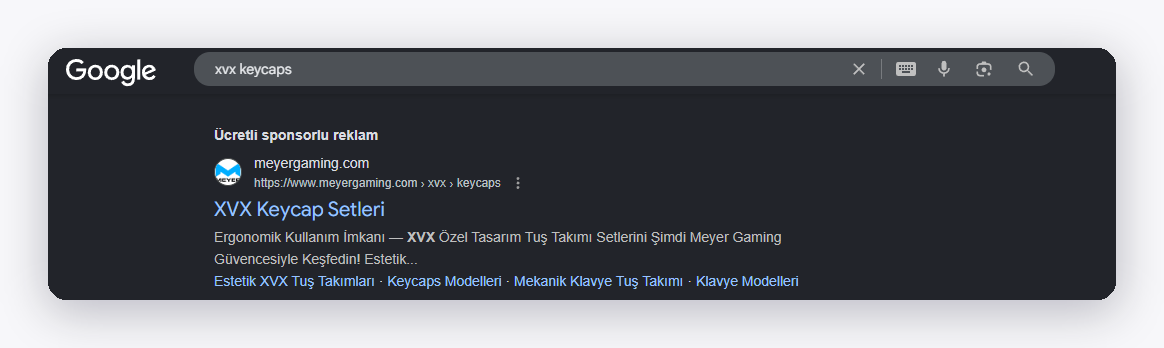
We did not stop at model-based searches. We also built separate Search and Shopping campaigns for high-volume category searches such as “gaming keyboard”, “gaming mouse”, “mechanical keyboard” and “gaming headset”. At the same time, SEO-optimised category and product pages fed the Dynamic Search Ads (DSA) campaigns, allowing new products in the catalogue to enter the ad system without any manual intervention.
One of the most important levers of growth was the Performance Max campaigns. We built custom audience segments from users visiting Turkey’s leading gaming brands and retailers. This allowed us to reach not only broad interest groups, but users actively researching competitor brands and approaching the purchase stage.
Meta Ads: Scalable Ads Through a Dynamic Catalogue Structure
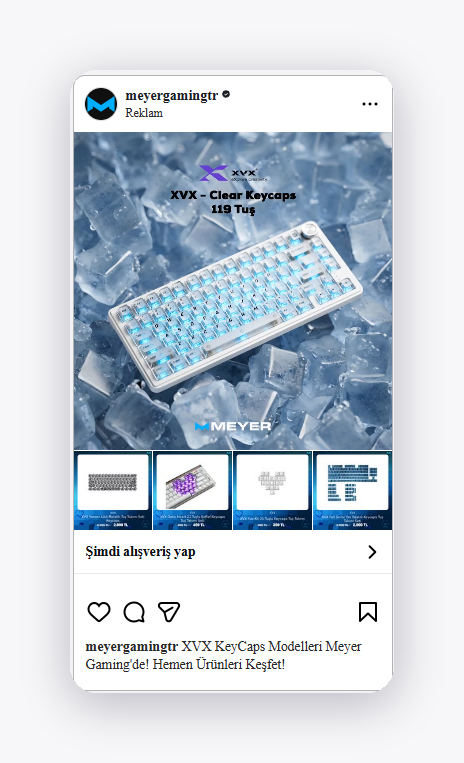
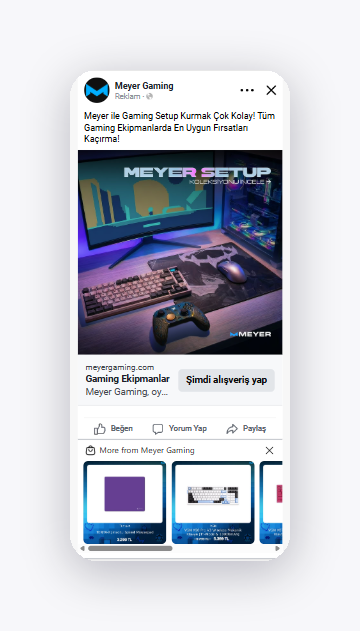
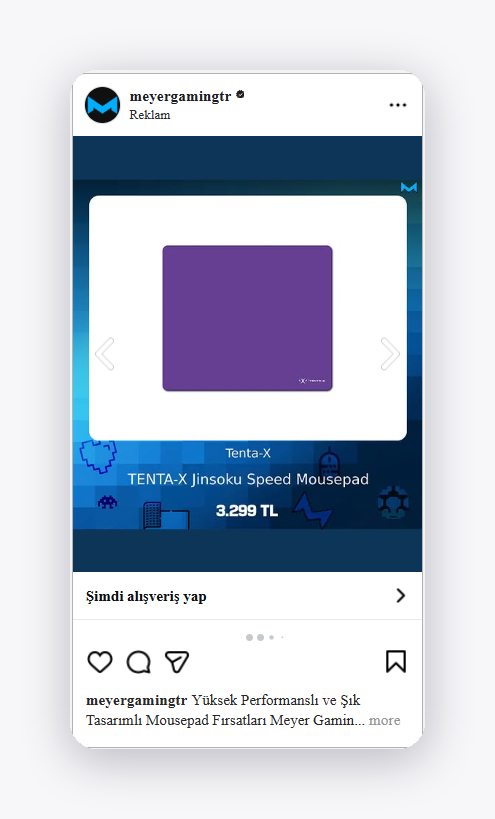
On Meta we created separate catalogue structures for each brand. Nine different sub-brands in total were managed through their own product feeds with Advantage+ Catalog Ads and Collection Ads campaigns. All ad creatives were produced with OptiFeed’s dynamic creative infrastructure. Because product images, price information, promotions and discount rates were pulled automatically from the feed, there was no need to design each product separately. Thanks to this structure, hundreds of products turned into ads that update automatically with stock or price changes. Production time was cut considerably and the ads always stayed live with up-to-date product information.
 |  |  |
TikTok: Carrying the Same Infrastructure into a New Discovery Channel
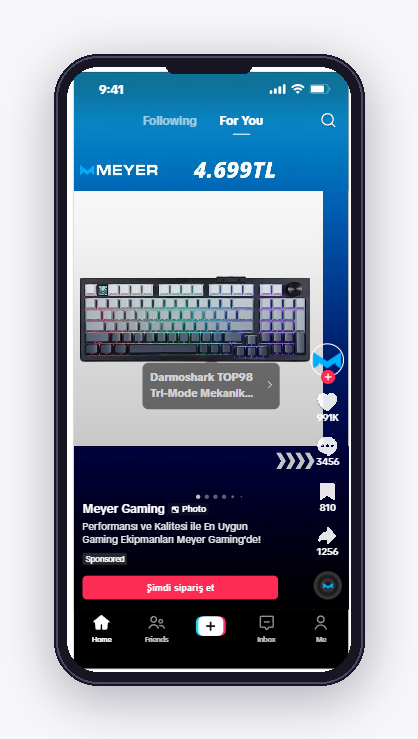
We adapted the dynamic catalogue structure we had built for Meta to TikTok as well. Catalogue ads were created using the same product feed, targeting users who engage with gaming content.
Through hashtag-based targeting and interest segments aimed at gaming communities, we reached potential customers at an earlier stage of the purchase journey and supported brand awareness and product discovery.
We Built an Audience System That Produces Data
At the start we had no first-party data at all. For that reason our first goal was not only to generate sales, but also to create quality data the ad platforms could learn from.
Once the first purchases began coming through, member and customer data was passed to Google and Meta. Lookalike audiences were built from this data and campaigns began to be optimised with far greater accuracy over time.
In this way, a system that started with absolutely no data turned into a sustainable growth mechanism that produces its own data and becomes smarter with every new purchase.
Reddit: Reaching High-Intent Gaming Communities
In the next phase of growth we added Reddit to the media plan. For Reddit — one of the strongest communities influencing purchase decisions in the gaming category — the targeting strategy and ad creatives were approved in advance together with the platform team.
By targeting relevant subreddits and gaming communities, we reached users researching products with high purchase intent directly. This gave us visibility beyond search engines and social media platforms, in the communities where the decision-making process naturally takes place.
Challenges Overcome
Two challenges were specific to this campaign. The first was zero historical data: the platform algorithms had no signals to optimise against. We solved this by bringing SKU-level search to the front, because purchase signals could only be produced by capturing the highest-intent users first and then feeding that data into Meta lookalike audiences. The second was the regulated category: all creative templates were designed around the product rather than lifestyle and were pre-approved at template level, so we could launch variants safely and at scale.
Results
From March 2025 onwards, almost without exception, every month outperformed the one before. Monthly impressions grew by roughly 600% versus the starting level and exceeded the 15-month target. Total paid conversions closed more than 10% above target. Attributed revenue exceeded the set target by more than 30%.
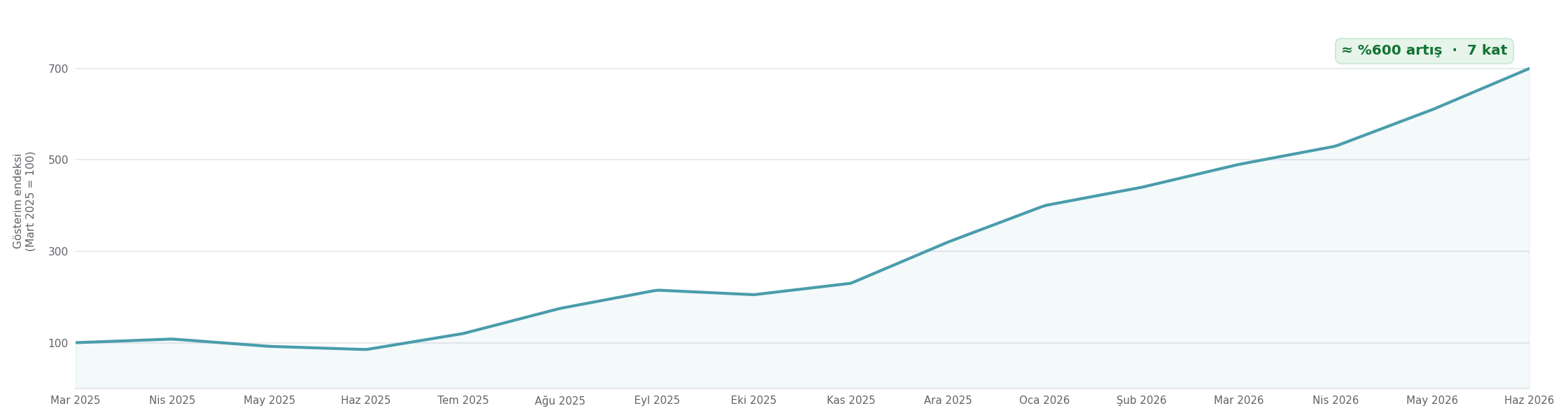
On Google Ads, ROAS came in more than 60% above the target; Meta Ads ROAS also landed 60% above target. The purchase curve in GA4 has moved upwards every month since launch.
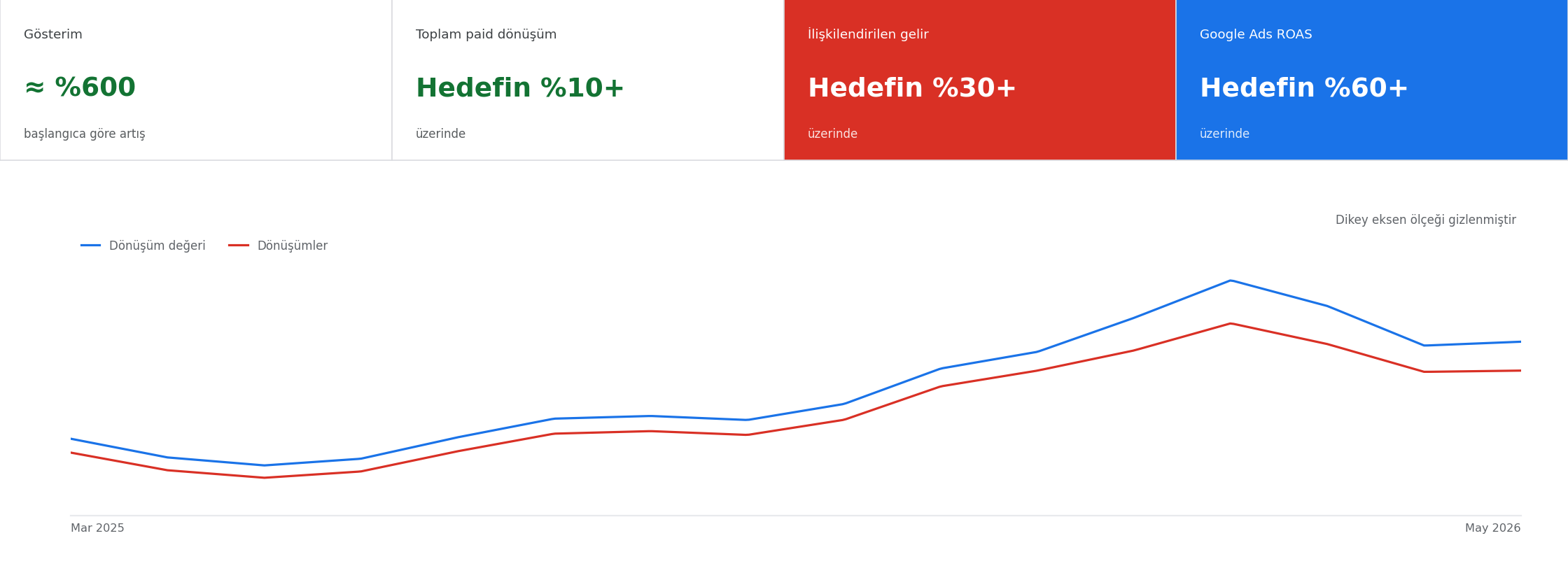
Conversion value (blue) opened up faster than conversion count (red): we did not just sell more, average order value rose as well.
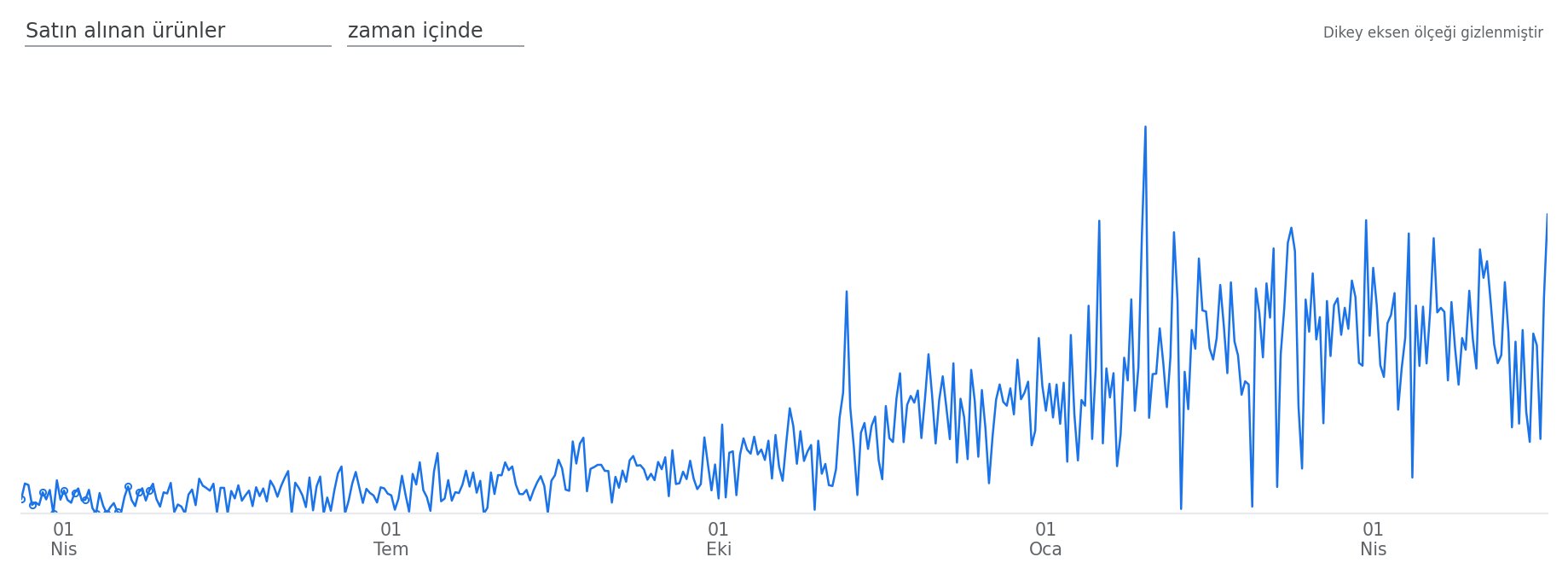
In GA4, the number of items purchased moved into an uninterrupted climb after a flat first few months.
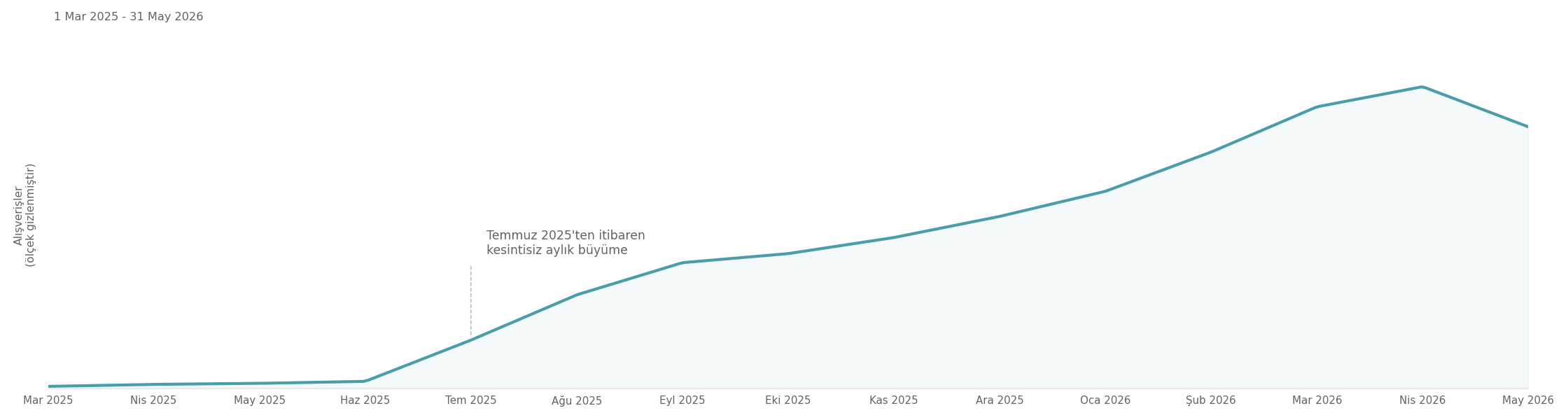
On Meta, purchases beat the previous month almost every month from July 2025 onwards; the curve steepened as the catalogue structure scaled.
In short: every numerical target set was exceeded, and this was achieved with no historical data, in a regulated category, and with a small-scale budget.
“The hardest part of building a brand from scratch is having to make decisions with no data at all. Peaksense did not just set up campaigns for us; they built a system that produces its own data. Our monthly impressions grew roughly sevenfold while we also came in clearly above our ROAS target. Being able to say precisely which channel does what today is, for us, as valuable as the numbers.”
Meyer Gaming — Brand and Marketing Lead
Takeaways for Brands
The Meyer Gaming project made it clear what brands entering a market from scratch need in order to grow sustainably.
Our biggest learning was that when there is no data, you have to produce it first. By targeting brand- and model-based searches with high purchase intent, we created not only the first sales but also the first quality data set feeding the Google and Meta algorithms. Search therefore became not just a converting channel, but the foundation feeding the entire growth ecosystem.
Another important insight was the potential of competitor audiences. Custom segments targeting users who engage with competing gaming brands performed far more strongly than expected, particularly for a new brand, and played a significant role in lowering customer acquisition cost.
We also saw that in regulated categories success depends not only on media strategy but on operational readiness. Thanks to a product-focused, pre-approved dynamic creative structure, we were able to launch hundreds of ad variations quickly and without problems. Managing every channel from a single product feed delivered operational efficiency and created a consistent experience across all platforms.
Ultimately, this project showed that growth for a new brand comes not from following existing demand, but from building demand from scratch with the right strategy. With a small team, a single data infrastructure and a multi-channel approach, we achieved sustainable and measurable growth from a starting point of zero.