

When we took over the Gitmek Lazım account in October 2025, paid media investment was largely focused on driving website traffic. The next growth opportunity was to turn that traffic into qualified prospects genuinely interested in premium international travel and carrying real sales potential.
Our brief was clear: move paid media beyond being a traffic channel and turn it into a sustainable growth engine that feeds the sales team with qualified leads on a steady basis.
We did not settle for optimising the existing structure; we rebuilt a lead-focused system from the ground up. Within eight months we exceeded every commercial target that had been set.
The Problem: Moving from Traffic to Qualified Demand
When we took over the account, two areas stood out. The first was that paid media investment was largely aimed at increasing website traffic. That structure produced visibility and visitor volume, but left a significant opportunity untapped in generating qualified prospects at the scale needed to feed the call centre consistently.
The second was lead quality. On European tours in particular, users who did not yet meet the visa or passport requirements for travel could still complete the forms. That meant the call centre spent time on enquiries less likely to convert, and cost per lead rose — especially in the high-value tour segments.
So our goal was not simply to increase lead volume, but to produce leads with higher sales potential, eligible to travel and more valuable to the call centre.
The Strategy: A Two-Layer Audience Architecture
The answer was not to spend more. We had to build a system that reaches the right person at the right moment, filters the lead at source, and gets smarter every month on its own data. For that we designed a two-layer audience architecture.
1. Route-specific interest targeting
We built detailed interest layers for every tour. For destinations Meta does not list as direct interests — such as Kazakhstan, Kyrgyzstan and Uzbekistan — we used intersection targeting across regional clusters. That surfaced inventory competitors were missing.
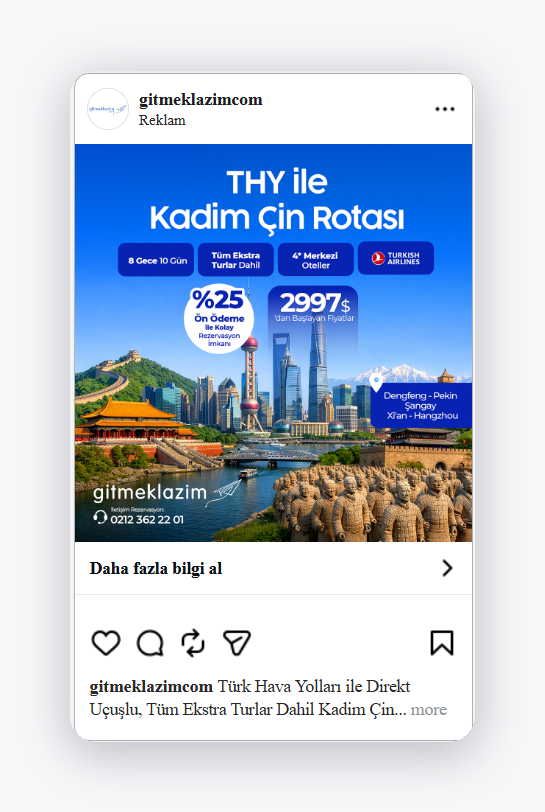
Creative was produced per destination as well; below is the ad from the China route we ran in partnership with Turkish Airlines.
2. Sheet-based custom audiences and monthly lookalike refresh
Every completed lead form was pushed into a route-based shared sheet. From those sheets we rebuilt custom audiences every month and refreshed route-specific lookalike audiences. A tour that began with dozens of leads in its first month was soon feeding its lookalike with thousands of data points. Seed quality compounded month over month.
The strategic difference: pre-segmentation at source
We used the lead form not as a field that merely collects contact details, but as a filtering tool. Prospects were segmented at source by travel month, party size, visa or passport status and city. The call centre therefore began working only with verified, high-intent records.
Execution: From a Form to a Self-Feeding System
Channel setup
Meta lead campaigns formed the backbone of the system. We complemented that with call-only campaigns, introduced in recent months for high-intent tours, and with lower-cost WhatsApp messaging.
The audience line
People who complete the lead form → route-based shared sheet → monthly custom audience rebuild → monthly lookalike refresh. This loop became the strategic moat that lets the system feed itself every month.
The four-stage evolution of the lead form
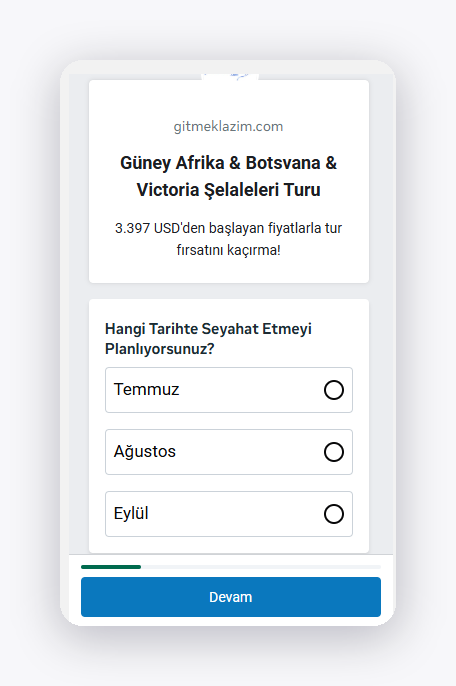
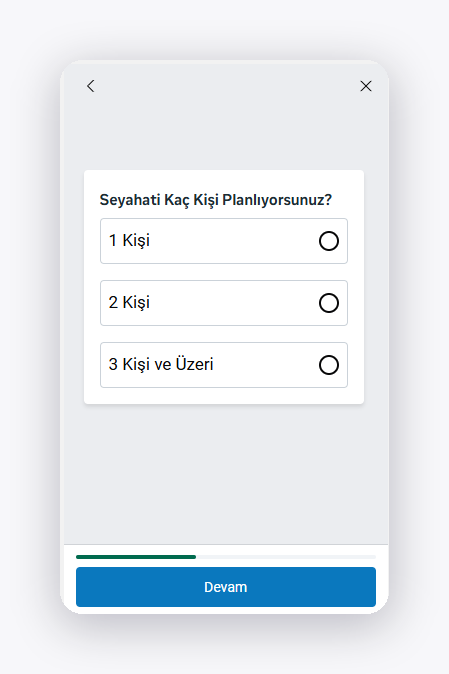
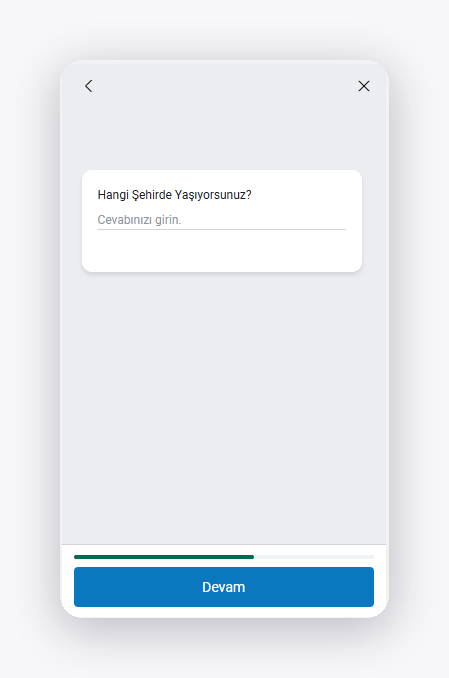
We matured the form in four steps. We dropped the first, auto-filled version because of low quality. In the second version we moved to a multi-step structure asking for travel date and party size. In the third we added a manually typed “Which city are you in?” field to prevent accidental completions. In the final version we introduced conditional logic that adapts to each route.
 |  |  |
Standout idea: conditional form logic
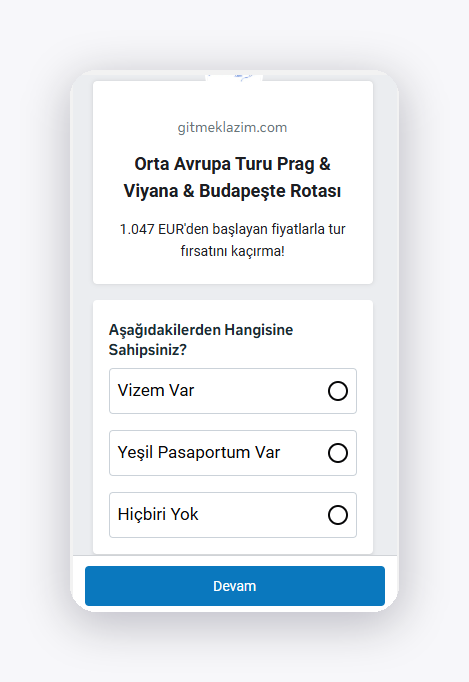
On European tours the form asks: “Do you have a Schengen visa / green passport?” If the answer is YES, the prospect qualifies as a lead; if NO, the form closes and the user is not counted as a lead. A field usually assumed to hurt conversion became a pre-filter at the auction stage. The result: in the most expensive segment, cost per lead fell rather than rose.
Challenges Overcome
Instead of scaling the existing structure, we rebuilt the system around the new commercial goals. The sheet-based monthly lookalike model we developed in that process became one of the structures that continuously feeds performance and turned into a meaningful strategic advantage over time.
To improve application quality we added conditional logic to the form flow. We positioned the visa question not merely as information gathering, but as a pre-filter that routes users according to their eligibility to travel. Users who did not yet meet the requirements were sent into a separate flow, while the main lead pool began to consist of prospects with higher conversion potential.
That change improved cost per lead, particularly on European tours, and let the call centre teams spend their time on conversations with higher sales potential.
Results
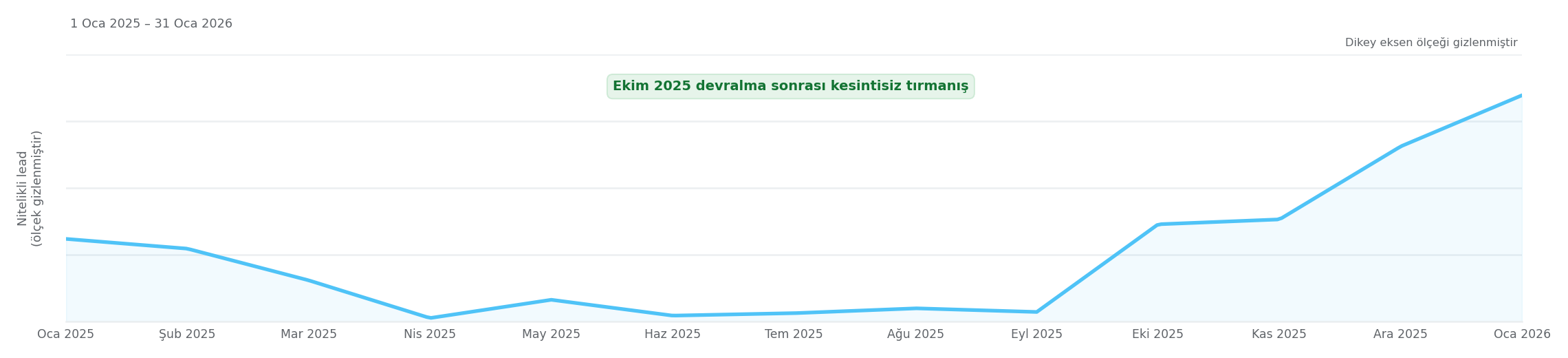
In the eight months after takeover, the number of qualified leads delivered exceeded target by roughly 30%. The last two months were the period in which the campaign hit its highest volume at its lowest cost simultaneously.
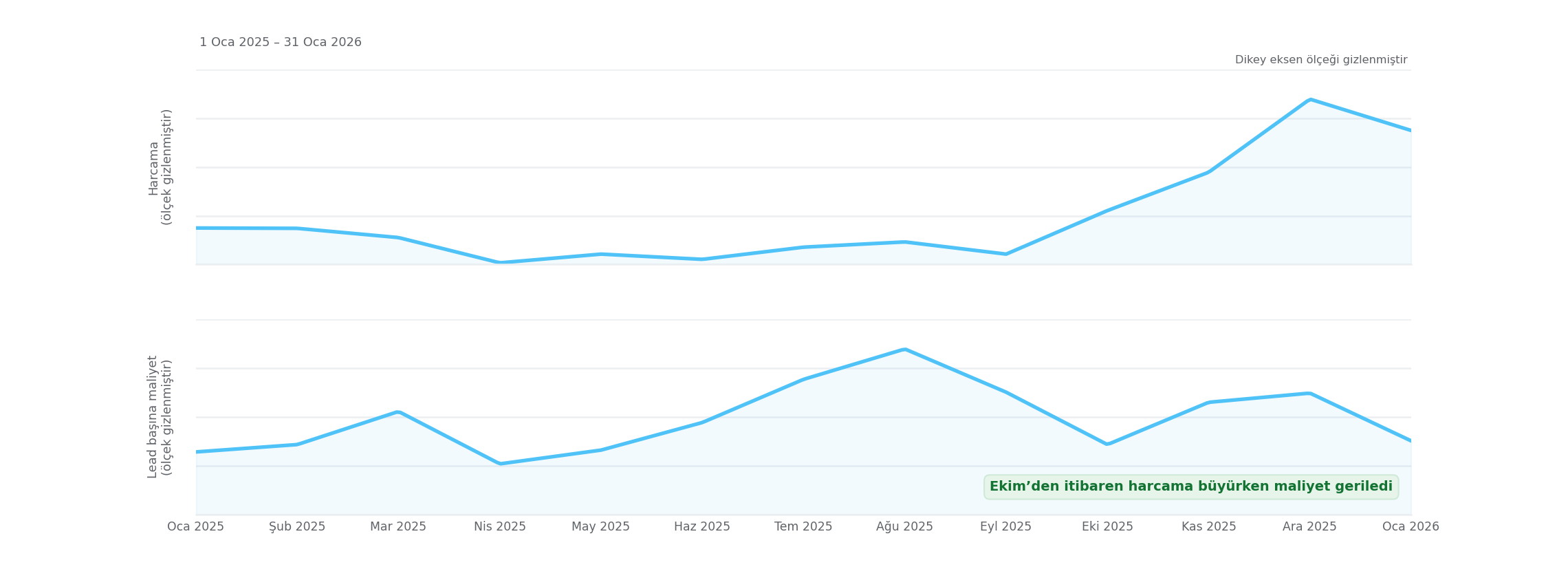
Blended cost per lead came in 20% below target; the most recent cost was roughly half that of the most expensive month. Monthly rooms booked landed more than 30% above target, and cost per room 20% below it. Because the sheet-based lookalike line improved seed quality every month, cost held steady while spend grew.
Target / Metric | Result |
|---|---|
Qualified leads delivered | Roughly 30% above target |
Blended cost per lead (CPL) | 20% below target |
Monthly rooms booked | 30%+ above target |
Cost per room | 20% below target |
The lead engine is now the brand’s primary and repeatable demand channel.
Takeaways for Brands
The Gitmek Lazım project produced five core lessons for lead-driven brands:
Target qualified leads, not traffic. If an account was built for the wrong objective, rebuilding it around the right one usually beats scaling it.
Use the lead form as a filter. The right question can screen out prospects who will not convert while still at the auction stage, bringing cost down.
Turn data into a system. A loop that regularly feeds leads into lookalike audiences creates an advantage that compounds over time and is hard to copy.
Sometimes adding friction is right. A manually typed field prevents accidental completions and can lift conversion to sale.
Cost and scale need not be opposites. As seed quality improves, you can grow spend while holding — or even lowering — cost per lead.